
Buddhist Practice - Western Psychology
Trauma - Anxiety
Teens - Women - Underserved Population
Digtal Flatform

Current Projects
Acceptance Commitment Therapy and Anxiety Disorder
Mindfulness-based interventions have become central in mental health care for reducing anxiety and enhancing well-being. Acceptance and Commitment Therapy (ACT), which integrates mindfulness, acceptance, and values-based action, is particularly aligned with Buddhist contemplative practice and has demonstrated strong empirical support for increasing psychological flexibility and reducing anxiety. Clinical outcomes, however, vary, suggesting that not all individuals respond equally to ACT-informed treatment.
Research Question:
Why does Acceptance and Commitment Therapy (ACT) reduce anxiety for some individuals but not others, and what psychological, physiological, and sociocultural factors influence these differences in treatment response?
This research aims to investigate the psychological, physiological, and sociocultural factors that influence treatment response, including patterns such as emotional avoidance, attentional rigidity, and flexibility in responding to distress. By understanding these mechanisms, the study seeks to refine culturally responsive, mindfulness-based interventions, particularly for underserved populations. This work bridges clinical practice, Buddhist contemplative training, and empirical research, contributing to the development of accessible, evidence-informed interventions for anxiety and related conditions.
A Twelve-week Mindfulness Course supporting Anxiety Disorder
The Sīla–Samādhi–Prajñā Mindfulness Course, led by Sư Cô Liên Anh (My-Hieu Thi Le), is an integrative program rooted in Vipassanā meditation and contemporary mental health practices. The curriculum integrates ethical awareness (Sīla), mental stability (Samādhi), and insight (Prajñā) to foster mindfulness, emotional regulation, and compassionate self-relationship. This initiative is designed to support underserved populations affected by Binge Eating Disorder by addressing anxiety, shame, and dysregulated eating through trauma-informed and culturally responsive contemplative practices. By bridging Buddhist wisdom with evidence-based mental health frameworks, this program is proposed as a collaborative effort with the Nurish Research Foundation to advance accessible and holistic healing.
Available: March 2026

Past Projects
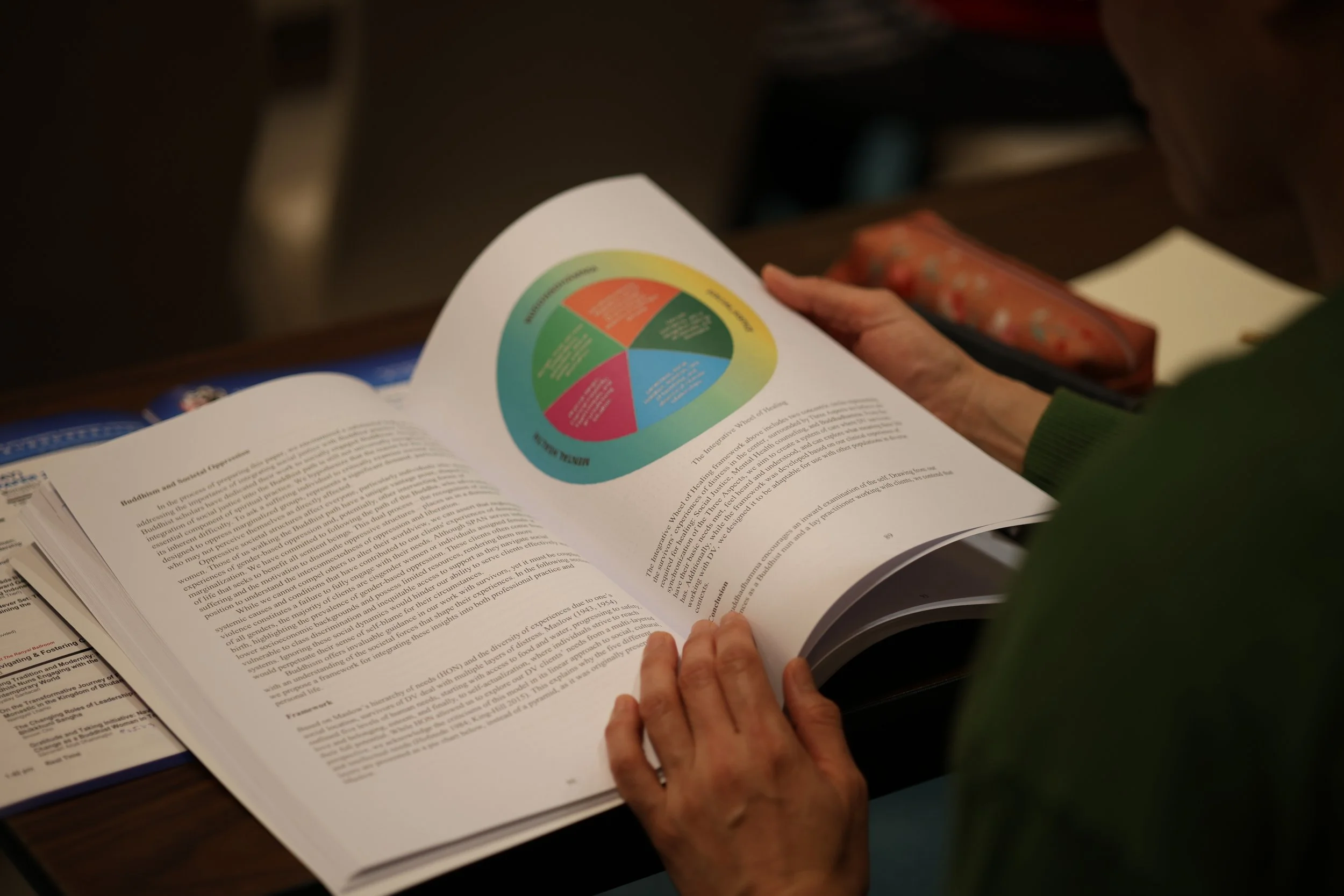
Healing at the Crossroads: Integrating Buddhist Teachings, Mental Health Counseling, and Societal Oppression in Working with Domestic Violence Survivors
Sakyadhita Conference 2025 in Sarawak, Malaysia
Presenters: My-Hieu Thi Le and Shannon Chang.

Buddhist Mindfulness: Sila-Samadhi-Prajna - Clinical Model for Trauma and Stress-Related Mental Health Disorders
NourishED Research Summit: Changing the Conversation Around Nutrition, Mental Health, and Eating Disorders in Boulder, Colorado
Presenters: My-Hieu Thi Le